
Hardwood Gym Flooring in Memphis, TN: Installation, Refinishing & Care
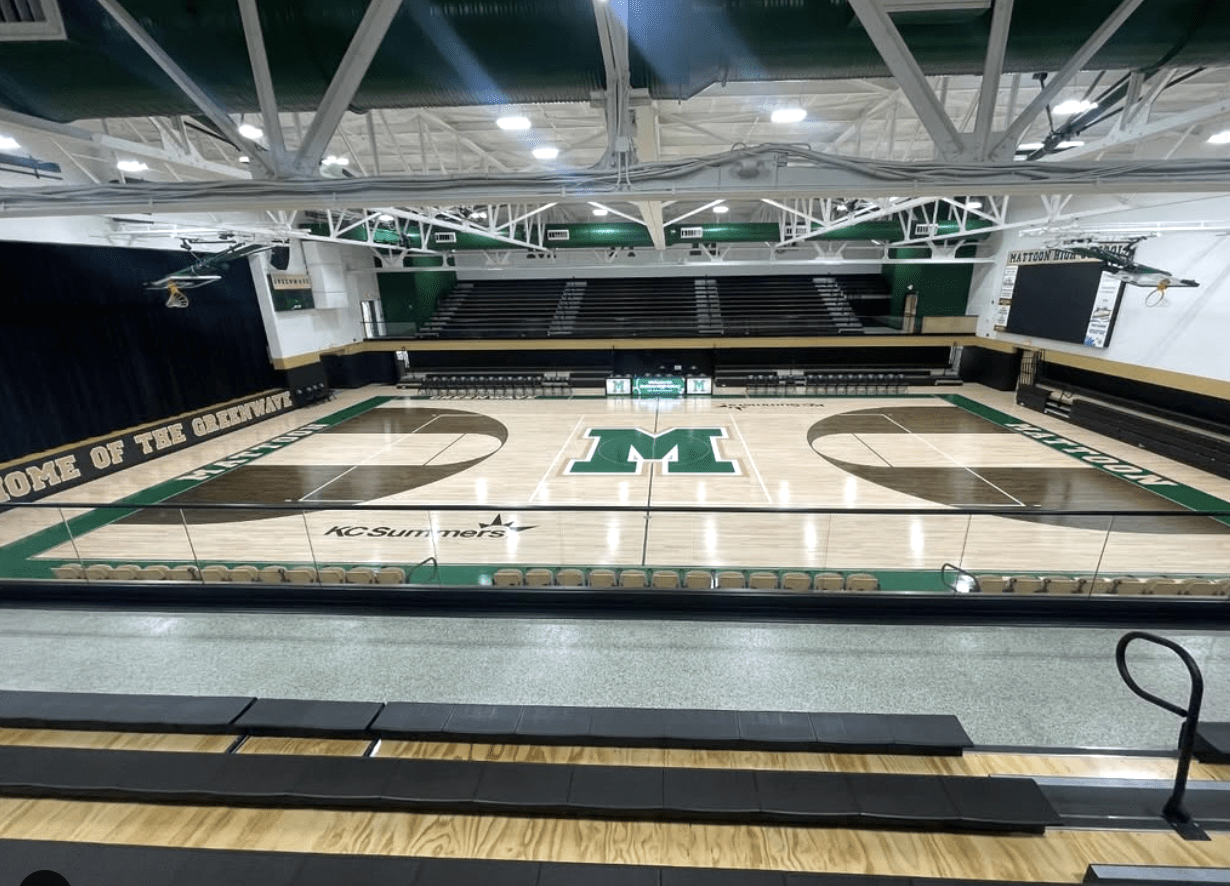
Hardwood gym flooring is a high-performance athletic surface built from hard maple boards installed over a shock-absorbing subfloor system. It can support the resilience, ball rebound, and traction needed for basketball, volleyball, and other indoor court sports. A maple court also brings a classic athletic look to schools, arenas, churches, recreation centers, and multi-purpose facilities in Memphis and across the Mid-South.
The species commonly used for hardwood basketball courts is northern hard maple (Acer saccharum). It is dense, tight-grained, and consistent under heavy traffic, which is why maple is widely used in athletic flooring systems. When you see a glossy court at a school, college, or competition venue, you are often looking at maple flooring installed and finished for athletic performance.
What Is Hardwood Gym Flooring?
Hardwood gym flooring is a graded hard maple playing surface fastened over an engineered subfloor that helps absorb impact, support ball response, and provide controlled traction. It is a common choice for competition basketball courts, volleyball courts, school gyms, and multi-purpose athletic spaces where performance and long-term serviceability matter.
There are two main system types to know:
- Fixed systems are permanently anchored to the concrete slab using a sleeper, channel, or pad-and-batten subfloor. These are common for arenas, schools, and multi-purpose gyms where the floor stays in place year-round. Learn more about anchored gym floor systems.
- Portable systems are designed for arenas that host basketball and other events. Panels lock together and can be installed for game use, then stored when needed. Explore portable wood floor systems and QuickLock portable flooring.
Beneath the maple sits an engineered subfloor that supports performance. A typical assembly may include a moisture vapor barrier, foam or rubber pads, plywood layers, and the maple wear surface. Together, these layers help manage three things athletes feel with every step:
- Shock absorption helps reduce the amount of impact transferred back to the athlete.
- Ball rebound affects how consistently a basketball responds on the playing surface.
- Surface friction helps athletes maintain traction while still allowing controlled pivoting and cutting.
Performance metrics are commonly evaluated through industry standards such as MFMA guidance in North America and EN 14904 in Europe. These standards help define expectations for shock absorption, vertical deformation, ball rebound, and surface friction. For facilities comparing hardwood system options, Sports Floors Inc. can help review the right system for the sport, facility type, and long-term maintenance plan. You can also review related MFMA position statements for additional flooring guidance.
Benefits of Hardwood Gym Flooring
Maple delivers a strong combination of athletic performance, serviceability, and visual appeal. For facilities that prioritize basketball, volleyball, and other court sports, a hardwood court can provide a reliable playing surface with a classic athletic feel.
Here is what your facility may gain with a properly installed maple floor:
- Shock absorption. The engineered subfloor under the maple helps distribute impact and supports athletic movement.
- Long-term serviceability. A well-maintained maple floor can often be sanded, screened, recoated, and refinished over time instead of being replaced as quickly as some surface types.
- Consistent ball response. Maple is widely used for basketball courts because it supports the bounce and feel players expect from a hardwood court.
- Refinishable surface. When the finish dulls or game lines fade, screening and recoating or sanding can help restore the surface.
- Custom appearance. Logos, game lines, stained borders, and school or team branding can be added during the finishing process.
- Facility presentation. A finished maple court can improve the look and feel of a school gym, recreation center, church gym, or event venue.
There is also the feel of the surface itself. Athletes, coaches, and facility managers often notice the sound, traction, and appearance of a properly maintained hardwood court. For related service support, visit Gym Floor Care & Maintenance and Wood Floor Maintenance.
Our Hardwood Gym Floor Installation Process
Installing a maple gym floor requires careful planning, site preparation, moisture review, acclimation, fastening, sanding, game line layout, and finishing. Timelines vary based on the facility, subfloor system, square footage, site conditions, and finish package. Here is how our team typically approaches each phase.
Step 1: Site Inspection and Moisture Testing
Before a single board comes off the truck, a Sports Floors Inc. team member reviews the site to evaluate the concrete slab, HVAC capabilities, and surrounding conditions. Moisture testing is important because excess moisture can cause serious problems for a maple floor. If the concrete reads too high, the issue should be addressed before installation begins.
Step 2: Vapor Barrier and Subfloor Framing
Once moisture conditions are acceptable, our crew installs a vapor barrier across the slab. The subfloor framing goes down next, whether that is a pad-and-batten system, sleepers, or a channel system, depending on the engineered specification for your facility. Facilities can compare different wood flooring systems on our Anchored, Floating, Portable, and Parquet pages.
Step 3: Racking Out, Blind Nailing, and Acclimation
After the subfloor is ready, the maple is brought into the space and arranged across the floor. This allows the wood to acclimate to the gym environment before fastening. As humidity changes, wood expands and contracts. Acclimation helps the boards adjust to the facility’s conditions before they are secured. After acclimation, the boards are blind nailed through tongue-and-groove joinery so fasteners do not show on the playing surface.
Step 4: Sanding, Game Lines, and Finish
Once the floor is fastened, our team sands the surface using multiple grit passes. We then apply game line paint to your specifications, which may include basketball, volleyball, pickleball, custom logos, and other markings. The surface is then sealed with finish selected for your facility’s use, needs, and timeline. You can learn more about court graphics and layout support through our Painting & Striping page.
Project timing depends on facility size, subfloor complexity, acclimation needs, sanding requirements, game line work, and finish cure time. Sports Floors Inc. can provide a more accurate timeline after reviewing the site and project scope.
Is Hardwood Gym Flooring Right for Your Facility?
Maple is a strong option for many courts, but it is not always the right call for every space. The best choice depends on your sports, traffic levels, budget, maintenance plan, and whether the space also handles non-athletic use.
Hardwood is often a fit for:
- College and university arenas
- High school competition gyms
- Church and community center multi-purpose gyms
- Recreation centers hosting league basketball or volleyball
- Event venues that host tournaments or athletic events
Sports and uses that commonly fit maple include:
- Basketball
- Volleyball
- Indoor court sports requiring consistent ball response
- Dance and performance use when the correct finish is selected
Hardwood vs. Synthetic: Quick Comparison
| Factor | Hardwood Maple | Synthetic Flooring |
|---|---|---|
| Upfront cost | Often higher | Often lower |
| Long-term serviceability | Can be sanded, screened, recoated, and refinished | Maintenance and replacement needs vary by product |
| Ball rebound | Strong fit for basketball and court sports | Varies by system and use |
| Refinishable | Yes | Usually limited compared to wood |
| Heavy fitness equipment | May require protection or a different surface | Often better suited for weight rooms and fitness areas |
| Aesthetic appeal | Classic hardwood court appearance | Functional and customizable depending on product |
If your facility needs a surface for weight rooms, fitness spaces, or heavy rolling equipment, synthetic flooring, synthetic gym floors, or rubber athletic flooring may be worth comparing.
Things to Consider Before Choosing Hardwood
- Budget. Maple usually costs more upfront than synthetic alternatives. The long-term value depends on use, maintenance, refinishing needs, and facility goals.
- Climate control. Your facility needs HVAC that can help control humidity year-round. Wide humidity swings can lead to movement, cupping, or crowning.
- Use case. If your gym sees heavy free weight drops, treadmills, or frequent rolling equipment, a synthetic surface may be better suited for that area.
- Maintenance commitment. Maple needs daily dust mopping, periodic cleaning, and routine screening and recoating. If that schedule will not be followed, synthetic may be a better option.
Why Choose Sports Floors Inc. for Hardwood Flooring
Sports Floors Inc. designs, installs, repairs, and maintains athletic flooring across Memphis and the Mid-South. From new construction to gym floor refinishing and repair, our team helps facilities choose and maintain athletic surfaces that fit their needs.
Here is what sets our team apart:
- Hands-on athletic flooring experience supporting wood gym floors, basketball courts, synthetic floors, and maintenance projects across the Mid-South.
- MFMA certified installation support for maple gym flooring projects that require industry-standard procedures for subfloor assembly, acclimation, fastening, and finishing.
- Wood floor system knowledge across anchored, floating, portable, parquet, QuickLock, DuraCushion, Rezill Cushion, and related athletic flooring systems.
- Service support after installation through care and maintenance, water damage repair, screening and recoating, patching, sanding, and complete refinishing.
- Project experience across schools, universities, churches, recreation centers, arenas, and multi-purpose facilities. Visit our Project Gallery and Projects pages for more.
When your facility needs a new court, a restored finish, or help choosing between hardwood and synthetic options, Sports Floors Inc. can help you review the right path for your space. You can also visit our Resources and About pages to learn more about our company and flooring support.
Hardwood Gym Flooring FAQs
How much does hardwood gym flooring cost per square foot?
Wood gym floor cost depends on the subfloor system, square footage, finish package, site conditions, and custom design work like logos and game lines. Pricing is usually higher than some synthetic alternatives upfront, but total value depends on maintenance, refinishing, and long-term facility use. For an accurate quote on your specific project, contact our team for a site review.
How long does a maple gym floor last?
The lifespan of a maple gym floor depends on installation quality, moisture control, use level, maintenance, and refinishing history. With proper care, many hardwood athletic floors can remain in service for many years. Routine cleaning, climate control, and periodic screening and recoating help protect the surface.
How often should a gym floor be refinished or recoated?
Recoating frequency depends on traffic, event use, finish condition, cleaning routine, and facility schedule. Many facilities plan periodic screening and recoating to refresh traction and appearance, while full sanding and refinishing is typically done less often. If you see scuffs, dull finish, peeling, or traction issues, it may be time to schedule a professional inspection.
Can hardwood flooring be installed over existing concrete?
Yes, hardwood gym flooring is often installed over concrete slabs using an engineered subfloor system. The concrete must first be evaluated for moisture, and a vapor barrier is installed before the subfloor and maple are added. Moisture testing is an important step in helping reduce the risk of flooring failure.
What maintenance does a hardwood gym floor require?
Hardwood gym floors need regular dust mopping, approved cleaning methods, quick spill cleanup, and consistent climate control. Periodic deep cleaning and professional recoating can help protect the finish and the maple beneath it. For more detail, visit Gym Floor Care & Maintenance.
Is hardwood or synthetic flooring better for my gym?
It depends on use. For competition basketball, volleyball, and court sports where ball response matters, hardwood basketball flooring is often a strong choice. For fitness centers, weight rooms, and high-traffic multi-purpose spaces, synthetic flooring may make more sense. Many facilities use both: maple on the main court and synthetic in adjacent training areas.
Get a Hardwood Gym Flooring Quote
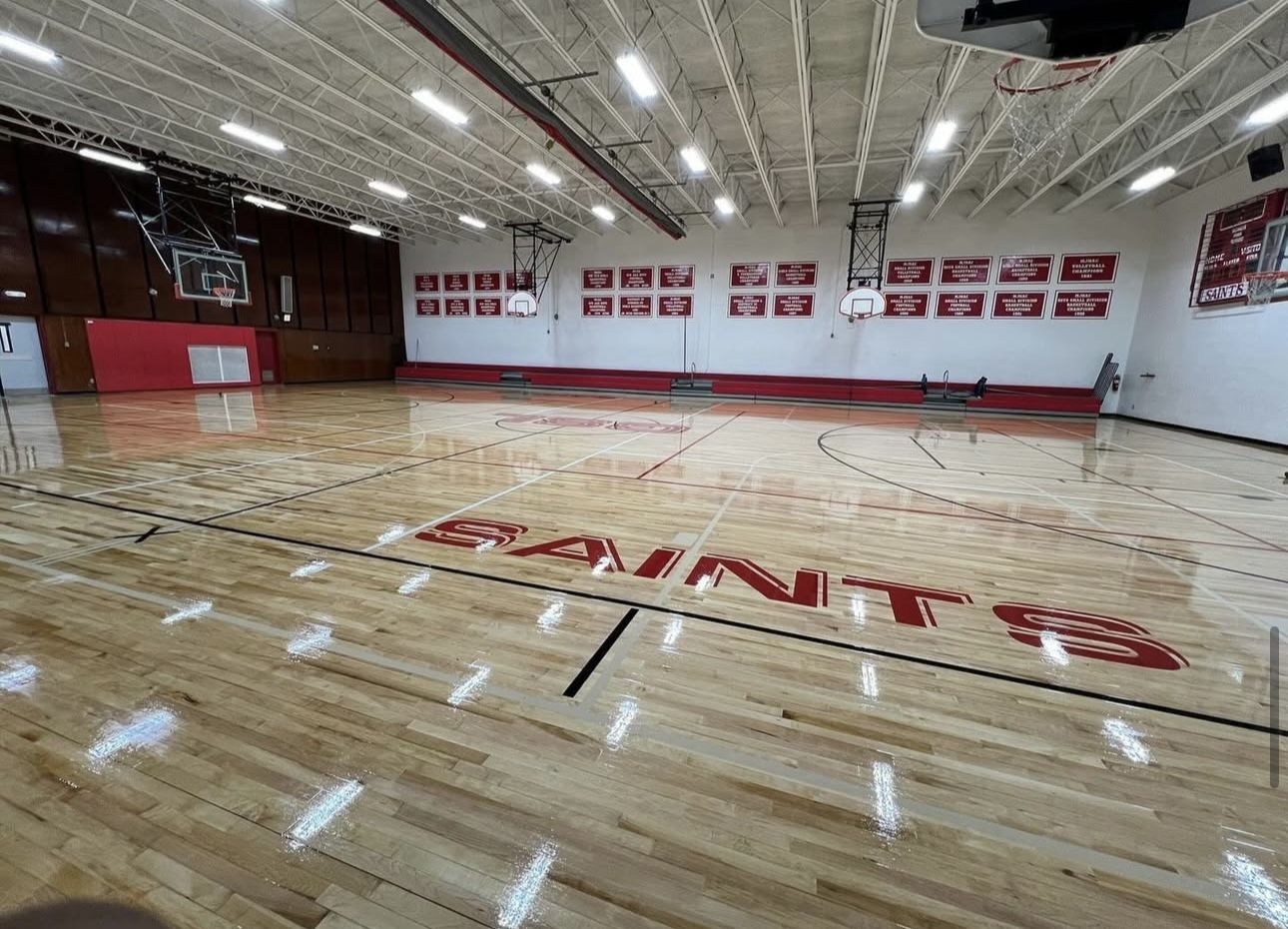
Ready to start a project? Whether you are planning a new arena, replacing an aging high school court, or requesting a professional assessment of your existing floor, our Memphis-based team is ready to help facilities across the Mid-South.
When you contact Sports Floors Inc., you can discuss:
- Project goals and facility use
- Site assessment and moisture review
- Custom design options for logos, game lines, and stains
- Timeline, materials, and flooring system options
Our Memphis, TN office serves facilities across Tennessee, Mississippi, Arkansas, Louisiana, Alabama, Texas, and Missouri. Call Sports Floors Inc. at 901-452-9492 or request a consultation online to get started.
Prepare to be floored.