
Synthetic Flooring for Athletic Facilities: A Complete Guide
What Is Synthetic Athletic Flooring?
Synthetic flooring is an engineered, non-wood athletic surface built in layers over a concrete or wood subfloor. A shock-absorbing base handles impact, a dense wear layer takes the traffic, and the whole system is sealed and striped as one continuous surface. Poured urethane, rubber, vinyl, and modular tile are the four common families.
Every layer in that build has a specific job to do. The base absorbs and returns energy, so an athlete landing hard is not landing on bare slab. The wear layer stands up to scuffing, rolling loads, and abrasion from equipment carts and street shoes. The topcoat sets the traction and protects the color and game lines sitting underneath it. Adjust the thickness of any single layer and the floor feels measurably different underfoot, which is why two systems that look identical in a photograph can play nothing alike.
Each material family behaves a little differently underfoot:
- Polyurethane (poured in place): troweled or poured in liquid lifts, cures into one continuous membrane with no joints for dirt to hide in
- Rubber: vulcanized or recycled rubber sheets and rolls, excellent for weight rooms and indoor tracks
- Vinyl: rolled sheet goods with a foam or fabric backing, popular in multi-purpose gyms and cardio spaces
- Polypropylene modular tile: interlocking snap-together squares, often used for multi-use courts and spaces that need to change quickly
Performance isn't guesswork. Indoor athletic surfaces are frequently measured against EN 14904, the European standard that sets criteria for shock absorption, vertical ball rebound, surface friction, and vertical deformation. Those four numbers tell you how a floor will feel to an athlete landing on it. Because EN 14904 was written for European projects, North American specifications typically pair it with ASTM F2772, the Standard Specification for Athletic Performance Properties of Indoor Sports Floor Systems, which covers the same shock absorption and ball rebound criteria for the US market.
You'll find synthetic systems in field houses, indoor tracks, weight rooms, multi-purpose gyms, arena concourses, and backstage areas. One clarification worth making: synthetic is not the same as engineered wood (which still has a real wood wear layer), and it's not the same as a portable roll-out system that comes and goes with the event calendar.
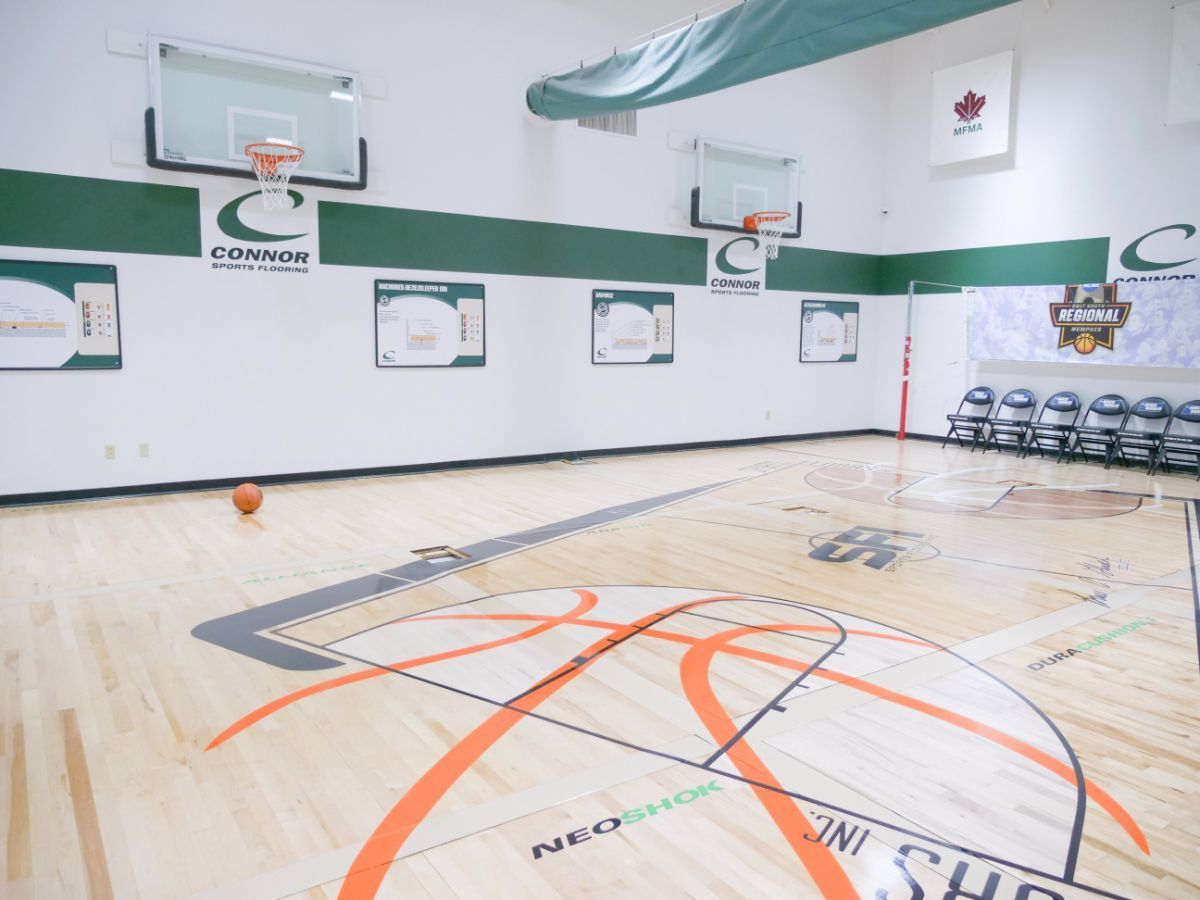
How Synthetic Sports Floors Are Built and Installed
Installing synthetic flooring takes five steps: moisture testing, moisture mitigation when readings run high, base layer installation, wear layer application, and finally game lines with a protective topcoat. Most projects run 5 to 14 days, depending on square footage, cure times, and how much prep the concrete slab needs before anything goes down.
- Moisture testing and slab evaluation. Our team runs in-situ relative humidity probes, calcium chloride tests, or both, and checks the slab for flatness tolerance. Concrete that reads above the manufacturer's limit will fail an adhered system, no matter how good the product is. This is also where we look for the conditions that invite MOLD (another four letter word in this office).
- Moisture mitigation or vapor barrier. If the readings exceed spec, a roll-on or troweled moisture mitigation membrane goes down first. Skipping this step is the single most common reason synthetic floors bubble, blister, or release from the slab years later.
- Base layer. Depending on the system, that means a rubber underlayment mat, a prefabricated elastic pad, or a poured elastic layer. This is the shock absorption engine of the floor, and its thickness is what separates a fitness-grade surface from a court-grade one.
- Wear layer. Poured urethane goes down in measured lifts, each one curing before the next. Sheet goods are rolled out and adhered. Modular tile snaps together over the prepped slab. Different methods, same goal: a hard-wearing surface with consistent thickness edge to edge.
- Game lines, logos, and topcoat. Lines get laid out, masked, and painted, custom logos and inlaid graphics go in, then the entire floor is sealed with a UV-cured or urethane topcoat. Cure time here is not negotiable. Walking a floor early is how you get permanent marks in a brand new surface.
Square footage matters less than site condition. A 12,000 square foot field house on a clean, dry, level slab can move faster than a 6,000 square foot auxiliary gym sitting on a below-grade slab with a moisture problem nobody knew about.
Benefits of Synthetic Flooring in Athletic Facilities
Synthetic systems earn their place in facilities that ask a single room to do six different jobs. Here's where they shine:
Why do facilities choose synthetic flooring for gym spaces?
Most of the time the decision comes down to conditions the building simply cannot change: a slab that holds moisture, a mechanical system that can't keep humidity steady, and a calendar with far more on it than practice and game nights. Synthetic flooring for gym spaces answers all three of those at once, without asking your staff to work around the floor.
- Moisture resistance. A continuous, non-porous surface shrugs off spills, condensation, and humidity swings that would leave a wood floor cupping or crowning. That's a real advantage in any building where late-summer air does whatever it wants.
- Multi-use tolerance. Bleachers roll out. Banquet tables come in. Street shoes, band practice, graduation chairs, wrestling mats, and weight equipment all land on the same surface without a floor cover crisis.
- Uniform shock absorption. Because the elastic layer is installed at a consistent thickness across the whole area, athletes get the same force reduction in the corner as they do at center court.
How much maintenance and design freedom do you get?
The second half of the argument shows up in the years after installation, in what your custodial staff has to do every week and in what your program gets to put on the floor for everyone in the stands to see.
- Lower routine maintenance. No annual screening and recoating cycle, no sanding schedule. Daily dust mopping and periodic auto-scrubbing handle most of the work.
- Design flexibility. Color choice is essentially unlimited, and logos, inlaid graphics, directional texture, and multi-sport striping can all be built into the surface rather than sitting on top of it.
- Long service life. With regular cleaning and a topcoat renewal on schedule, a well-installed synthetic floor holds up through many seasons of hard use.
See the beauty of it: your maintenance staff spends less time babysitting the floor and more time on everything else in the building.
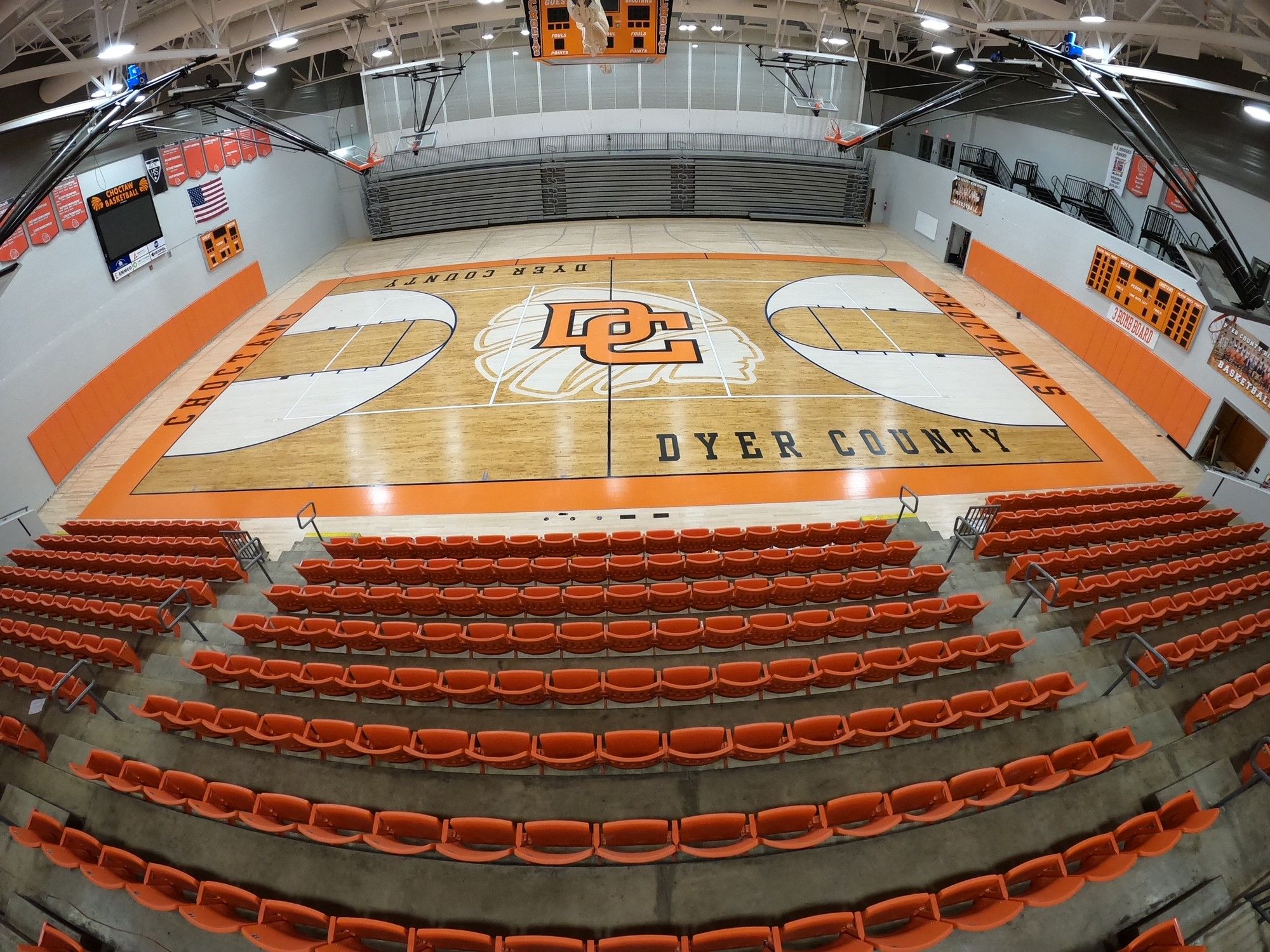
Synthetic vs. Hardwood Flooring: Which Is Right for Your Facility?
Neither surface wins every argument. The right call comes down to what happens in the room and what's underneath it.
| Factor | Synthetic System | Maple Athletic Floor |
|---|---|---|
| Typical service life | 10 to 30 years, depending on system type, with proper care | 40 to 60 years when properly maintained |
| Maintenance cycle | Dust mop, auto-scrub, periodic deep clean and topcoat renewal | Dust mop, annual screening and recoating, full sand-and-refinish roughly once a decade |
| Moisture tolerance | High; non-porous and unaffected by humidity swings | Sensitive; excess moisture leads to cupping or crowning |
| Multi-purpose traffic | Excellent, minimal floor protection needed | Good, but requires floor covers for non-athletic events |
| Competition basketball | Playable with the right shock absorption and ball rebound | Preferred surface at every level of championship play |
| Aesthetics | Any color, custom graphics, painted or inlaid | Classic grain, sanded and restriped to look new again |
Maple remains the standard for competition basketball. MFMA-grade northern maple can be sanded back to bare wood and restriped repeatedly, which is why a well-cared-for court can outlive the coaching staff that opened it. Basketball governing bodies favor it for championship play, and Connor Sports has been the official court supplier of the NCAA Final Four since 2006. For the service-life ranges in the table above, MFMA and the individual manufacturers publish their own expectancy figures, and those published numbers are the ones worth citing when this project reaches a board presentation.
Synthetic makes more sense when the room isn't primarily a competition basketball court. Below-grade slabs, chronic high moisture readings, indoor tracks, weight rooms, and rooms booked solid with non-athletic events all point toward synthetic.
Plenty of facilities do both. A maple main court with synthetic in the auxiliary gym, fitness center, track, and corridors gives you competition-grade performance where it counts and low-maintenance durability everywhere else. That hybrid layout is one of the most common plans our team designs.
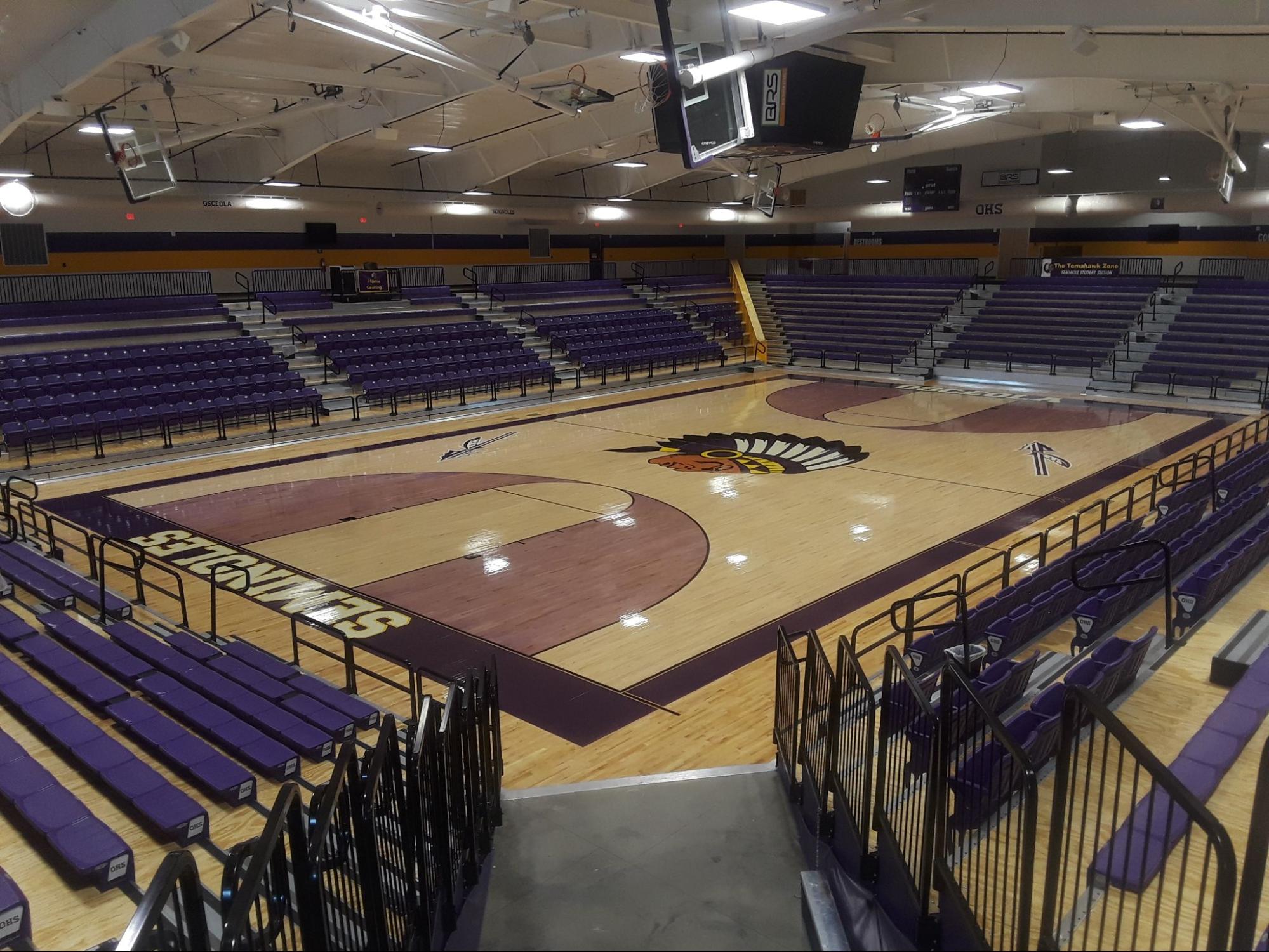
Is Synthetic Flooring a Good Fit for Your Space?
Some rooms are obvious candidates. Others deserve a second look before you commit. The honest test isn't what the product brochure promises, it's the slab, the mechanical system, and the event calendar taped up in your office.
Strong candidates for synthetic:
- Below-grade or slab-on-grade concrete with elevated moisture readings
- Buildings without consistent year-round HVAC and humidity control
- Multi-purpose rooms booked for athletics, assemblies, testing, banquets, and graduations
- Indoor tracks, weight rooms, fitness centers, and cardio areas
- Stage, backstage, and corridor spaces that take rolling equipment
Worth reconsidering if:
- Competition basketball or volleyball at a high level is the room's primary purpose
- Your program values the look and feel of maple as part of its identity
- You already have a maple floor that inspection shows is sound
Before you decide, work through these questions: What's the primary sport in this space? How many non-athletic events land here each year? Does the building hold humidity between 35 and 50 percent year-round? Who cleans the floor, and how often? And where does this project fall in your facility renovation timeline?
One more thing worth checking. An older wood floor that looks rough is often not finished. After an inspection by a Sports Floors, Inc. team member, we may find that screening and recoating, or a full sand and refinish, brings it back without a full replacement. That's worth knowing before you commit to a synthetic conversion, because a floor you thought was a teardown can turn into a maintenance project instead.
Frequently Asked Questions About Synthetic Flooring
How long does synthetic gym flooring last?
Life expectancy varies by system type. Poured urethane systems typically deliver 10 to 15 years of service, PVC and vinyl sheet goods commonly reach 25 to 30 years with proper maintenance, and rubber systems are usually warrantied for 10 years but often outlast that. Across all system types, life expectancy depends heavily on the wear layer thickness and on how reliably grit gets pulled off the surface before it grinds in.
Can you play basketball on synthetic flooring?
Yes. Playability comes down to the system's shock absorption, vertical ball rebound, and surface friction, which is exactly what EN 14904 measures. A properly specified synthetic court with an adequate elastic layer plays well for recreational, church league, middle school, and many high school programs. For championship-level competition, maple is still the preferred surface.
What are synthetic flooring materials made of?
The four common material families are polyurethane, rubber, vinyl, and polypropylene. Poured polyurethane cures into one continuous membrane. Rubber comes in sheets, rolls, or tiles, often with recycled content. Vinyl arrives as rolled sheet goods with a cushioned backing. Polypropylene is molded into interlocking modular tile.
How do you clean and maintain a synthetic sports floor?
Dust mop daily to pull off grit that acts like sandpaper underfoot. Run an auto-scrubber with a pH-neutral cleaner approved by the floor manufacturer on a weekly or event-driven schedule. Never use household cleaners, oil-based dust mop treatments, or anything abrasive. Every few years, a deep clean followed by a fresh topcoat restores traction and appearance, and keeping written records of those dates makes warranty conversations far simpler down the road.
Can synthetic flooring be installed over an existing wood floor?
Often, yes. The existing wood has to be structurally sound, flat within tolerance, dry, and free of loose boards or delaminated finish. Our team evaluates the subfloor system underneath before recommending it, because covering a floor that has a hidden moisture source only buries the problem.
Can synthetic floors be repaired or refinished?
Yes, though the methods differ from wood. Damaged sections of poured urethane can be cut out, patched, and blended. Sheet goods can be seamed in as a replacement piece. Modular tile is the simplest of all: pop out the damaged tiles, snap in new ones. Game lines can be repainted and the surface recoated without replacing the floor.
Is synthetic flooring slippery?
A properly specified system is engineered to a target friction range that keeps athletes from sliding out or sticking. Nearly every slip complaint we investigate traces back to maintenance practice, either residue left behind by the wrong cleaner or dust and grit that never got picked up. Correct the products and the schedule, and the traction usually comes right back.