
Gym Floor Lifespan at a Glance
How long does a gym floor last? Lifespan by floor type varies widely based on materials and care. Maple hardwood lasts 50+ years with periodic refinishing. Rubber flooring runs 10-20 years. Vinyl and synthetic sheet goods typically serve 15-25 years. Poured urethane systems hold up for 20-30 years with proper maintenance.
The real answer depends on three things: what the floor is made of, how hard it gets used, and how well it's maintained. A maple court in a well-managed facility can outlast the building itself. The same floor neglected through humidity swings and harsh cleaners might fail in a decade.
At Sports Floors, Inc., we've designed, installed, and maintained athletic flooring across the Mid-South since 1995, and we see the full lifespan story play out every week. Facilities that invest in proper installation, moisture control, and routine screening and recoating get decades more service from the same square footage. Those that skip annual care usually end up redoing work that routine care would have prevented.
How Gym Floor Lifespan Is Measured and What Shortens It
Gym floor lifespan isn't a single number. It's actually two numbers stacked together: the surface life (the wear layer you see and play on) and the subfloor system life (the pads, sleepers, or cushioning underneath). These wear at different rates and often get replaced on different schedules.
A maple surface might get screened and recoated every year, resanded every 6-10 years, and still ride on the original subfloor for 50+ years. A synthetic surface might be bonded directly to a concrete slab, so when the top goes, everything goes.
Here's what shortens a gym floor's useful life:
- Traffic volume. Schools average 1,500+ hours of use per year. Multi-purpose facilities hosting assemblies, PE classes, after-school programs, and community events wear faster than single-sport courts.
- Humidity and moisture intrusion. This is the number one failure cause we see in the Mid-South. One rainy weekend is all it takes for hidden moisture to turn a polished gym floor into a warped, uneven mess. Cupping or crowning follows quickly.
- Cleaning product compatibility. Harsh chemicals, improper pH cleaners, and over-wetting strip finish and damage wood fibers. Many lifespan losses trace back to the janitorial closet.
- Refinish cycles. Maple floors typically allow 8-12 sand-and-refinish events over their lifetime. Each full sand removes a measurable amount of wood, so sanding too often or too aggressively uses up the floor's "reserve."
- Subfloor and HVAC stability. The pad system, vapor barriers, and climate control inside the building determine true service life. A great floor over a bad slab won't outlast a good floor over a prepared one.
- Installation quality. A floor that wasn't properly acclimated, racked out, or fastened at installation will carry those problems for its entire service life. Shortcuts at the start take years off the end.
Bottom line: lifespan is earned through consistent care, not just purchased at installation.
Benefits of Choosing a Long-Lasting Gym Floor
Choosing a floor built to last pays back in ways that go well beyond installation day. Here's what facilities gain:
- Consistent athlete safety. Shock absorption, ball bounce, and surface friction stay within performance specs for decades on a quality system. That means fewer injuries from dead spots, slick areas, or hardened cushioning as the floor ages.
- Protected facility investment. A long-lasting floor preserves facility value, supports appraisals, and makes capital planning more predictable.
- Reduced downtime. Full floor replacement typically takes 4-8 weeks of court closure, plus curing and acclimation time. Facilities with long-lifespan floors avoid these shutdowns and the lost revenue, canceled games, and displaced programs that come with them.
- Sustainability benefits. Maple is a renewable, FSC-certified material when properly sourced. Our partnership with Connor Sports Flooring means products that qualify for LEED credits and recycled content options like Nike Grind for synthetic surfaces. Longer service life also means less material heading to landfills.
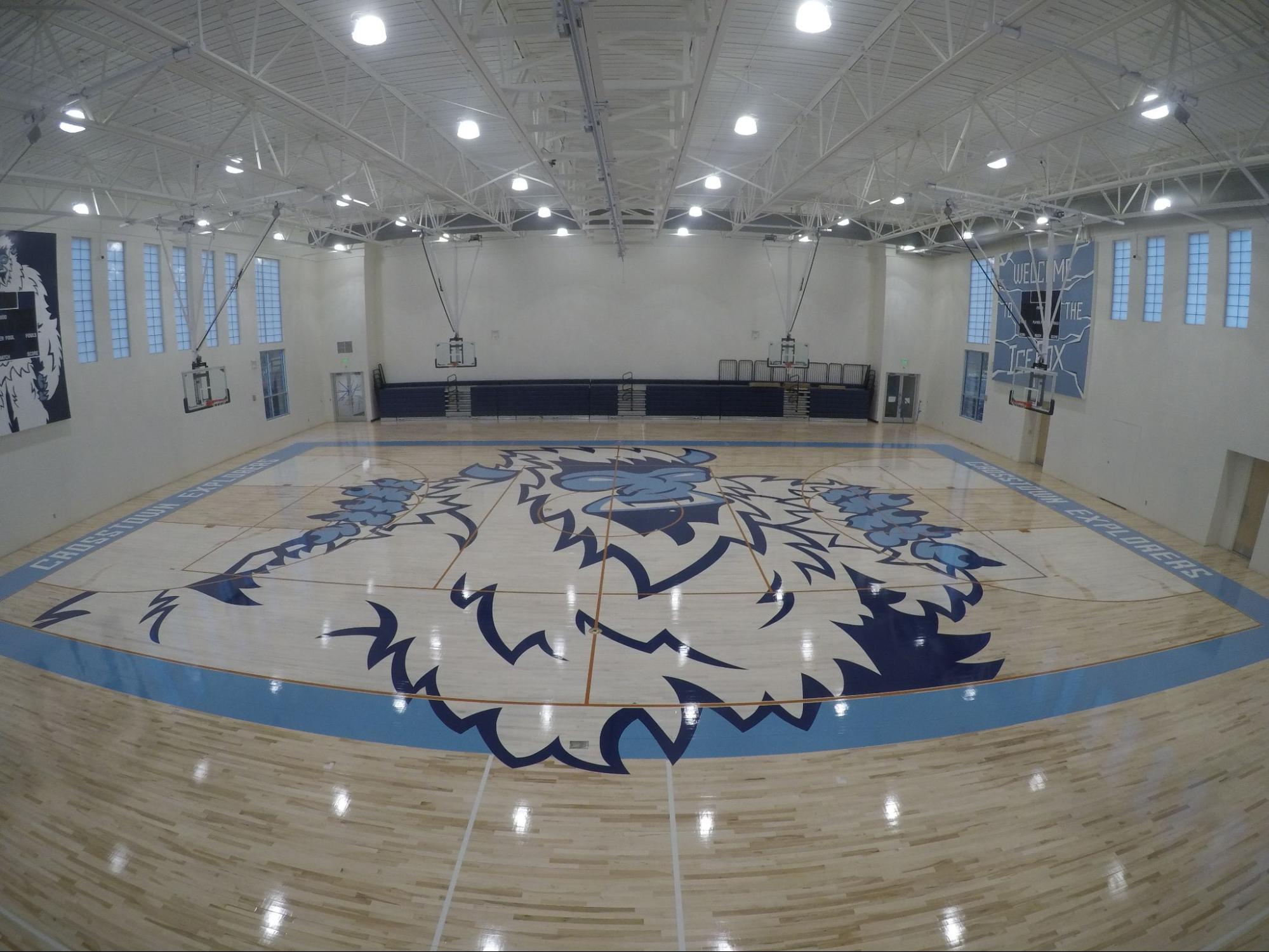
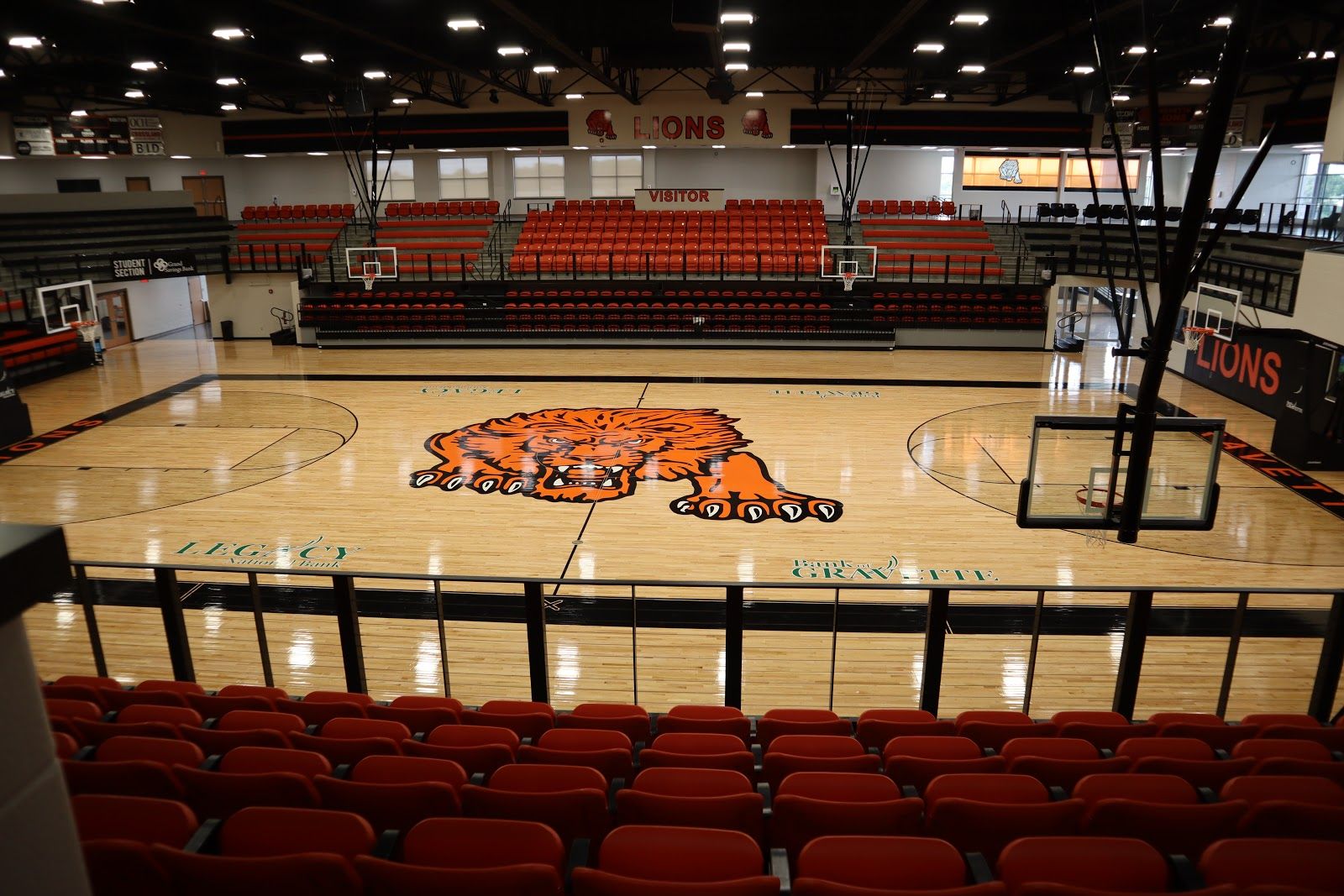
- Branding and aesthetics stay sharp. Custom logos, mascot center courts, game lines, and school colors represent significant creative investment. A floor built to last keeps that branding intact through multiple graphic refreshes rather than disappearing with a premature teardown.
For athletic directors, facility managers, and school boards, the longer-lasting system usually proves its value over the life of the building.
Lifespan Comparison by Floor Type: Wood, Rubber, Vinyl, Urethane
Not every floor is built for every space. Here's how the major athletic flooring categories stack up on lifespan, maintenance cycles, and best-fit applications.
| Floor Type | Typical Lifespan | Refinish/Recoat Cycle | Best Use Case |
|---|---|---|---|
| Maple hardwood | 50+ years | Recoat annually; resand every 6-10 years | Basketball, volleyball, main courts, performance gyms |
| Vulcanized rubber | 15-20 years | No refinish; clean & spot-replace | Weight rooms, free-weight areas, functional training |
| Rolled vinyl/synthetic | 15-25 years | Minimal; occasional deep clean | Multi-purpose rooms, elementary gyms, auxiliary courts |
| Poured urethane | 20-30 years | Topcoat refresh every 10-12 years | Field houses, indoor tracks, large multi-sport facilities |
| Interlocking tile/foam | 5-10 years | Replace damaged tiles individually | Portable setups, temporary venues, light-use areas |
Maple hardwood remains the gold standard for competition courts. With proper screening and recoating each summer and periodic resanding, a maple floor can serve three to four generations of athletes. It's the surface that still defines what a serious gym looks and sounds like.
Where weights get dropped and equipment rolls across the surface, vulcanized rubber excels. It won't refinish, but it also won't dent, and sections can be swapped without replacing the entire floor.
Vinyl and synthetic sheet goods are the workhorses of multi-purpose spaces. They handle chairs, assemblies, and rolling equipment without the finish-care demands of wood.
For large field houses, poured urethane is the long-game choice. It installs smoothly, cleans easily, and holds up to indoor track spikes, batting cages, and everything in between.
Interlocking tiles and foam have their place, but they're a shorter-term solution, not a 20-year investment.
Is Your Gym Floor a Candidate for Refinishing or Replacement?
Not every tired-looking floor needs to be torn out. Many floors that look done are actually candidates for refinishing. Others look fine on top but have failed underneath. Here's how our team at Sports Floors, Inc. sorts it out during an on-site assessment.
Signs your floor is a refinish candidate:
- Worn or hazy finish with visible traffic patterns
- Dull appearance even after routine cleaning
- Minor surface scratches, scuffs, and dead-ball spots from finish wear
- Game lines fading or chipping
- No cupping, crowning, buckling, or soft spots
- Subfloor remains stable with no moisture readings outside spec
Signs your floor needs full replacement:
- Cupping or crowning across multiple boards
- Buckling, lifted panels, or visible gaps
- Dead spots where the ball doesn't bounce consistently
- Water damage, staining, or black mold under the finish
- Delamination on synthetic surfaces
- Subfloor failure, broken sleepers, or compromised pad systems
- Maple floors that have already been resanded 8-12 times with little wood thickness remaining
Age thresholds help, but they're not absolute. A 40-year-old maple floor in a climate-controlled gym may have decades of life left. A 15-year-old floor in a facility with HVAC problems may already be past saving.
As MFMA certified installers and the largest Connor Sports Flooring distributor in the Mid-South, our team can assess your subfloor, moisture readings, finish condition, and remaining sand reserve to give you a straight answer. Partial repair is sometimes viable (board replacement in isolated areas), but widespread failure almost always calls for full replacement to protect athlete safety and facility investment.
Frequently Asked Questions About Gym Floor Lifespan
How often should a gym floor be refinished?
Most maple gym floors should be fully resanded and refinished every 6-10 years, with an annual screen and recoat in between. Heavy-use facilities may need resanding closer to the 6-year mark, while lightly used floors can stretch toward 10. Annual recoating is what makes the difference. Skip it, and the full refinish cycle shortens dramatically.
How many times can a hardwood gym floor be sanded?
A quality maple gym floor can typically be sanded and refinished 8-12 times over its lifetime. Each full sand removes a small layer of wood, so the total depends on original board thickness and how aggressively each refinish is performed. Light sanding during routine refinish cycles preserves the sand reserve for decades of service.
Can you mop a gym floor?
Only with a damp microfiber mop, never a soaking wet mop. Standing water and excess moisture are the fastest way to damage a wood gym floor, causing cupping, crowning, finish failure, and the dreaded four-letter word around our office: MOLD. Use manufacturer-approved cleaners, dust mop daily, and auto-scrub only with equipment and solutions rated for athletic flooring.
How thick should home gym flooring be?
For home gyms, 3/8" rubber flooring works for cardio and bodyweight training, while 1/2" to 3/4" is the standard range for free weights, platforms, and heavy equipment. Thicker rubber absorbs more impact, protects the subfloor, and reduces noise transfer. For dropped weights or Olympic lifting, 3/4" or stacked tiles are the safer call.
What's the Rule of 3 for flooring?
In athletic flooring, the key three factors are acclimation, moisture, and subfloor. New wood must acclimate to the facility's humidity and temperature before installation. Moisture testing on the slab and in the wood must fall within spec. And the subfloor system must be level, dry, and properly prepared. Skip any one of the three and the floor's lifespan drops dramatically.
Does humidity really affect gym floor lifespan?
Yes, more than almost any other factor. Wood expands and contracts with humidity changes, and sustained swings outside the 35-55% relative humidity range cause cupping, crowning, gapping, and finish failure. HVAC systems should run year-round to maintain stable conditions, even when the gym isn't in active use. In the Mid-South, where summer humidity is relentless, climate control is non-negotiable for protecting your flooring investment.
Prepare to be floored by what proper design, installation, and care can do for your facility's lifespan. Whether you're planning a new build, weighing refinishing against replacement, or just want a straight assessment of what you have, our team at Sports Floors, Inc. in Memphis is ready to help. Reach out through our contact page or call 901-452-9492 today to start the conversation.