
Installing a new basketball court is a multi-layered process that combines moisture control, subfloor framing, and a finished playing surface designed for athletic performance. At Sports Floors Inc., our team helps facilities across Memphis and the Mid-South plan, install, refinish, and maintain gym flooring built around the way the space will be used.
What Is a Basketball Court Flooring System?
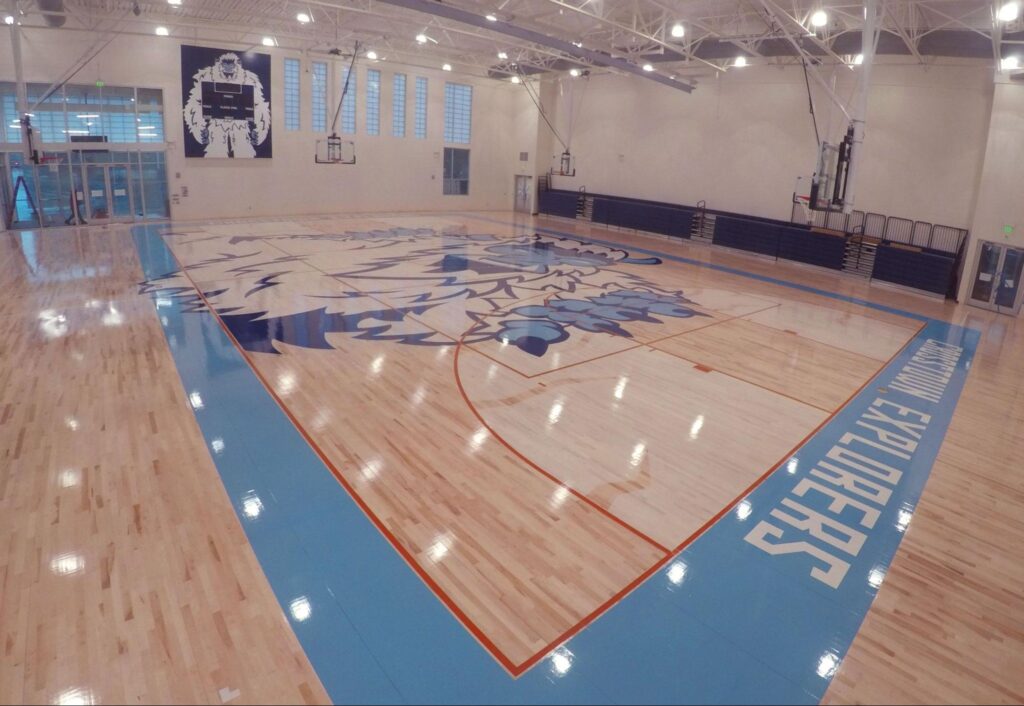
A basketball court flooring system is a layered assembly that includes a moisture barrier, a subfloor, and a finished playing surface. These layers work together to support ball rebound, shock absorption, and traction. The two primary surface choices are maple wood flooring and synthetic flooring systems made from materials such as polyurethane or PVC. Each option has its own performance profile, maintenance needs, and best-fit applications.
Court dimensions vary by level of play. NBA and college courts measure 94 feet by 50 feet, while high school courts are commonly 84 feet by 50 feet. Recreational, elementary, and middle school courts may be smaller depending on the available space and intended use.
Each layer has a job. The vapor membrane helps reduce moisture movement from the slab. The subfloor supports load distribution, shock absorption, and ball response. The finished surface, whether maple or synthetic, handles daily use from practices, games, PE classes, assemblies, and facility events.
Performance characteristics matter, too. A properly specified system supports consistent ball rebound, controlled surface friction, and shock absorption. These are important factors for facilities that want a court surface that performs reliably over time.
How a New Basketball Court Is Installed
Installing a new basketball court follows a step-by-step process that may include site assessment, moisture testing, vapor barrier installation, subfloor framing, surface installation, sanding, sealing, and game-line painting. Project timing varies based on court size, surface type, subfloor system, acclimation needs, site conditions, finish selection, and schedule requirements.
Here is how our team typically approaches a new court install:
- Site assessment and moisture testing. Before a single board goes down, the site should be reviewed for slab condition, moisture content, HVAC performance, and project requirements. Moisture testing is especially important for wood athletic flooring because excess moisture can contribute to cupping, crowning, or other floor movement later.
- Moisture control barrier. A vapor membrane is applied across the slab to help protect the flooring system. This step is important for wood floors and can also be part of the planning process for certain synthetic systems, depending on the product and site conditions.
- Subfloor system installation. Depending on the system specified, the crew installs a sleeper, channel, floating, or other engineered subfloor system. This is where performance characteristics such as shock absorption, ball response, and deflection are built into the court assembly. Facilities can explore related options through our Anchored, Floating, and Portable flooring pages.
- Racking out the playing surface. For maple courts, the wood is laid out and given time to acclimate to the gym environment before fastening. This allows the boards to adjust to the room’s conditions. Synthetic systems are rolled, poured, or installed according to the manufacturer’s specifications.
- Sanding, sealing, and game lines. Once the surface is in place, wood courts are sanded smooth, sealed, painted, and finished. Game lines, logos, borders, and multi-sport markings are added based on the facility’s use. Learn more about court markings on our Painting & Striping page.
The full timeline depends on the scope of work. A new basketball court installation may move quickly in a straightforward space, while larger gyms, moisture concerns, custom graphics, or complex subfloor requirements can extend the schedule. Sports Floors Inc. can provide a project-specific timeline after reviewing the facility.
Benefits of a Professionally Installed Court
A professionally installed court does more than look good on opening night. It supports the way athletes move, how the ball responds, how the facility functions, and how the floor can be maintained over time.
How Does a Professional Court Support Players?
Proper shock absorption helps reduce impact transferred back to athletes during running, jumping, and landing. Consistent traction can help support controlled movement, while even ball response helps keep play predictable across the court. These details matter for school gyms, college courts, recreation centers, churches, and competition facilities.
What Long-Term Value Does a New Court Deliver?
A properly installed maple floor can often be maintained through routine screening and recoating, sanding, and refinishing. The vapor barrier and subfloor design help reduce the risk of moisture-related issues when paired with proper facility conditions and maintenance. Center-court logos, school colors, multi-sport game lines, and stained borders can also give the facility a stronger identity.
If the existing court is not ready for full replacement, our team can also review gym floor replacement, repair, refinishing, or maintenance options before recommending the next step.
Wood vs. Synthetic Basketball Flooring
Choosing between maple and synthetic flooring comes down to how the space will be used, what kind of performance is needed, and what the facility can realistically maintain. Both surfaces have a place. The right choice depends on the room, sport mix, traffic level, budget, and long-term plan.
Maple is widely used for competitive basketball because it supports strong ball response, a classic hardwood feel, and long-term serviceability through refinishing. Synthetic surfaces, including poured polyurethane and rolled PVC, can be a strong choice for multi-purpose use, volleyball, pickleball, PE classes, assemblies, and fitness spaces.
| Feature | Maple | Synthetic Flooring |
|---|---|---|
| Performance feel | Classic hardwood court feel with strong ball response | Consistent surface feel that varies by product and system |
| Upfront cost | Often higher | Often lower |
| Maintenance | Cleaning, screening, recoating, sanding, and refinishing as needed | Cleaning and maintenance requirements vary by product |
| Long-term serviceability | Can be refinished over time | Usually more limited than wood depending on system |
| Best for | Competition courts, arenas, schools, and dedicated basketball spaces | Multi-purpose gyms, recreation centers, PE spaces, and fitness areas |
| Multi-sport use | Yes, with painted lines and proper maintenance | Often a strong fit for varied activities |
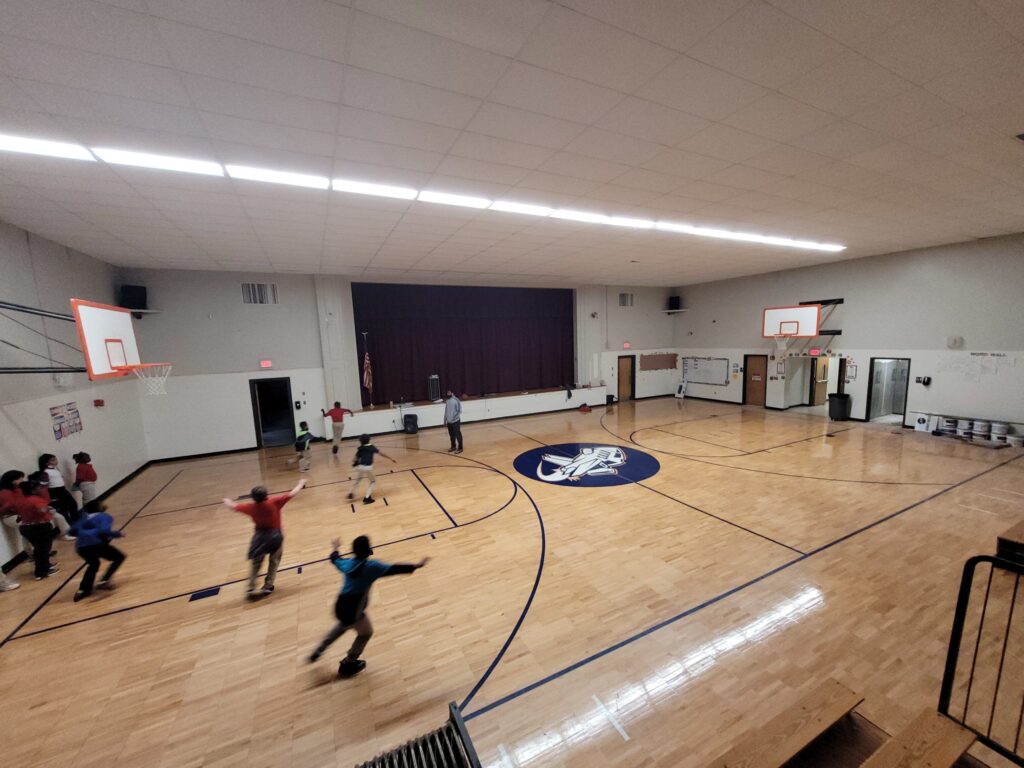
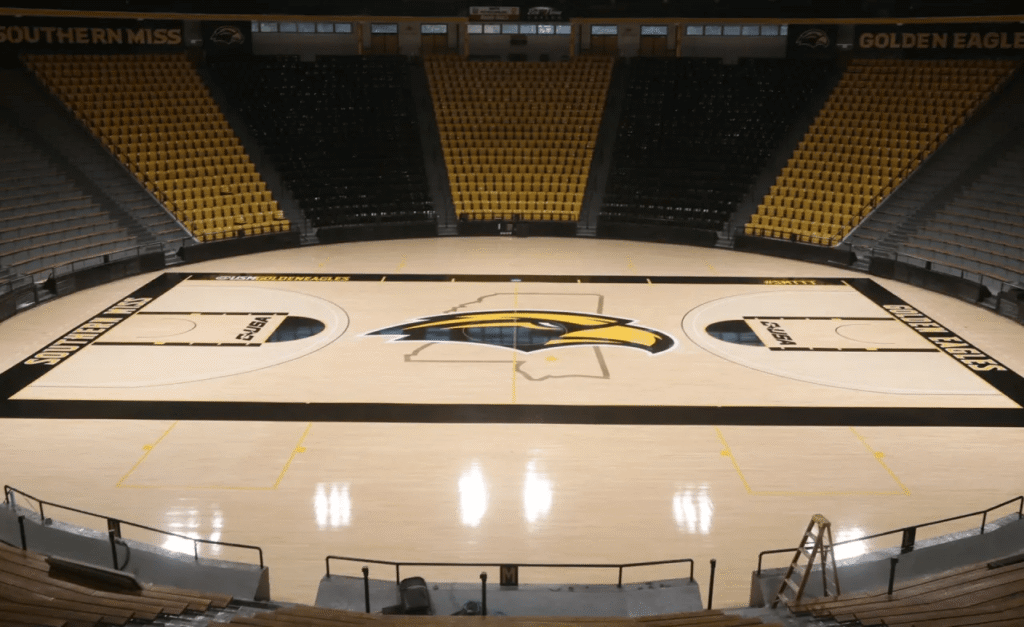
A college arena, high school competition gym, or dedicated basketball court may be better suited for maple. A church family life center, recreation space, or multi-use facility may benefit from a synthetic surface. Sports Floors Inc. can help compare wood floors, synthetic flooring, and synthetic gym floors based on your goals.
Cost Factors for Installing a Basketball Court
The cost of installing a new basketball court is driven by the flooring material, court size, subfloor type, moisture mitigation needs, custom graphics, site preparation, and finish system. Maple courts often sit at the higher end of the range, while synthetic systems may cost less upfront. Site conditions can shift either option.
Here are the main cost drivers to plan around:
- Flooring material. Maple is often one of the largest cost variables. Synthetic systems vary by thickness, manufacturer, and performance level.
- Court size. A regulation college court uses more material and labor than a high school court, practice court, or half-court surface.
- Subfloor system. Higher-performance subfloors with more shock absorption may cost more than basic systems.
- Moisture mitigation. If the slab tests high for moisture, additional vapor mitigation may be required before installation.
- Custom game lines and logos. Multi-sport line painting, center-court logos, and stained borders add labor and material.
- Site prep. Demolition of an existing floor, concrete leveling, or slab repair can affect the project cost.
- Finish system. The number of seal and finish coats, along with the product selected, affects both cost and long-term maintenance.
Our team can walk through budget expectations after reviewing your facility. Every gym is different, so a site-specific quote is the best way to understand the right path for your project.
Is a New Basketball Court Right for Your Facility?
A new court may make sense when the existing floor is past the point of refinishing, when you are building a new facility, or when the current surface no longer matches how the space is used. Schools, universities, arenas, church gyms, and fitness centers all have different reasons to invest in a new playing surface.
Before committing to a full install, ask a few questions:
- Could screening and recoating extend the life of the existing floor?
- Is this space dedicated to basketball, or does it need to handle volleyball, pickleball, PE classes, and assemblies?
- What does the concrete slab look like, and has it been moisture-tested recently?
- Is this part of a larger renovation or a standalone project?
- What is the realistic budget and timeline?
Sometimes the right answer is a full new court. Sometimes a professional refinish, repair, or recoat may be the better first step. After an inspection by a Sports Floors Inc. team member, we can help compare your options for the facility and the athletes who use it. For additional support, visit Gym Floor Care & Maintenance, Water Damaged Floors, and Resources.
Basketball Court Installation Across Memphis and the Mid-South
Sports Floors Inc. supports basketball court installation, gym floor replacement, wood floor maintenance, synthetic flooring, and athletic flooring projects across Memphis and the surrounding region. To learn more about local and regional flooring support, visit Gym Flooring in Memphis and Gym Flooring in the Mid-South.
You can also explore related project and planning resources through our Project Gallery, Projects, MFMA Position Statements, and Court Builder.
Frequently Asked Questions
How long does it take to install a basketball court?
Basketball court installation timing varies by court size, surface type, subfloor system, acclimation needs, moisture conditions, finish coats, and custom graphics. Sports Floors Inc. can provide a project-specific timeline after reviewing your facility and scope of work.
What is the best flooring for an indoor basketball court?
The best flooring depends on how the space will be used. Maple is commonly chosen for competitive indoor basketball because of its ball response, hardwood feel, and ability to be refinished. Synthetic surfaces can be a strong choice for multi-purpose facilities where basketball shares the room with PE classes, assemblies, volleyball, pickleball, or fitness activities.
How much does it cost to install a basketball court?
Cost varies based on material choice, court dimensions, subfloor system, site conditions, moisture mitigation, finish package, and custom graphics. Sports Floors Inc. provides project-specific estimates after assessing the facility and understanding the intended use.
Can you install a court over existing concrete?
Yes, many new basketball courts are installed over a concrete slab with a vapor barrier and subfloor system built on top. The slab should be tested for moisture and inspected for cracks, uneven areas, and other site conditions before installation begins.
How long does a maple basketball court last?
The lifespan of a maple basketball court depends on installation quality, moisture control, use level, maintenance, and refinishing history. With proper care, many maple athletic floors can remain in service for many years. Routine maintenance, controlled humidity, and prompt response to water exposure all help protect the surface.
Do basketball courts require moisture testing before installation?
Moisture testing is an important step before installing a wood basketball floor and is also useful when evaluating synthetic systems. Testing helps identify slab conditions that could affect the flooring system after installation.
Curious whether a new basketball court is the right call for your facility? Sports Floors Inc. designs, installs, repairs, and maintains athletic flooring for facilities across Memphis and the Mid-South. If you would like to talk through your options, contact us to get started.