
Your gym floor takes a beating. Between daily practices, pep rallies, graduation ceremonies, and the occasional rogue folding chair, that maple surface is working overtime. The question most athletic directors and facility managers ask us isn't if their floor needs attention. It's what kind of attention it needs. That's where the screen and recoat vs. refinishing question comes in, and picking the right service makes a real difference for your schedule, your downtime, and your floor's lifespan.
What Is a Screen and Recoat vs. Refinishing?
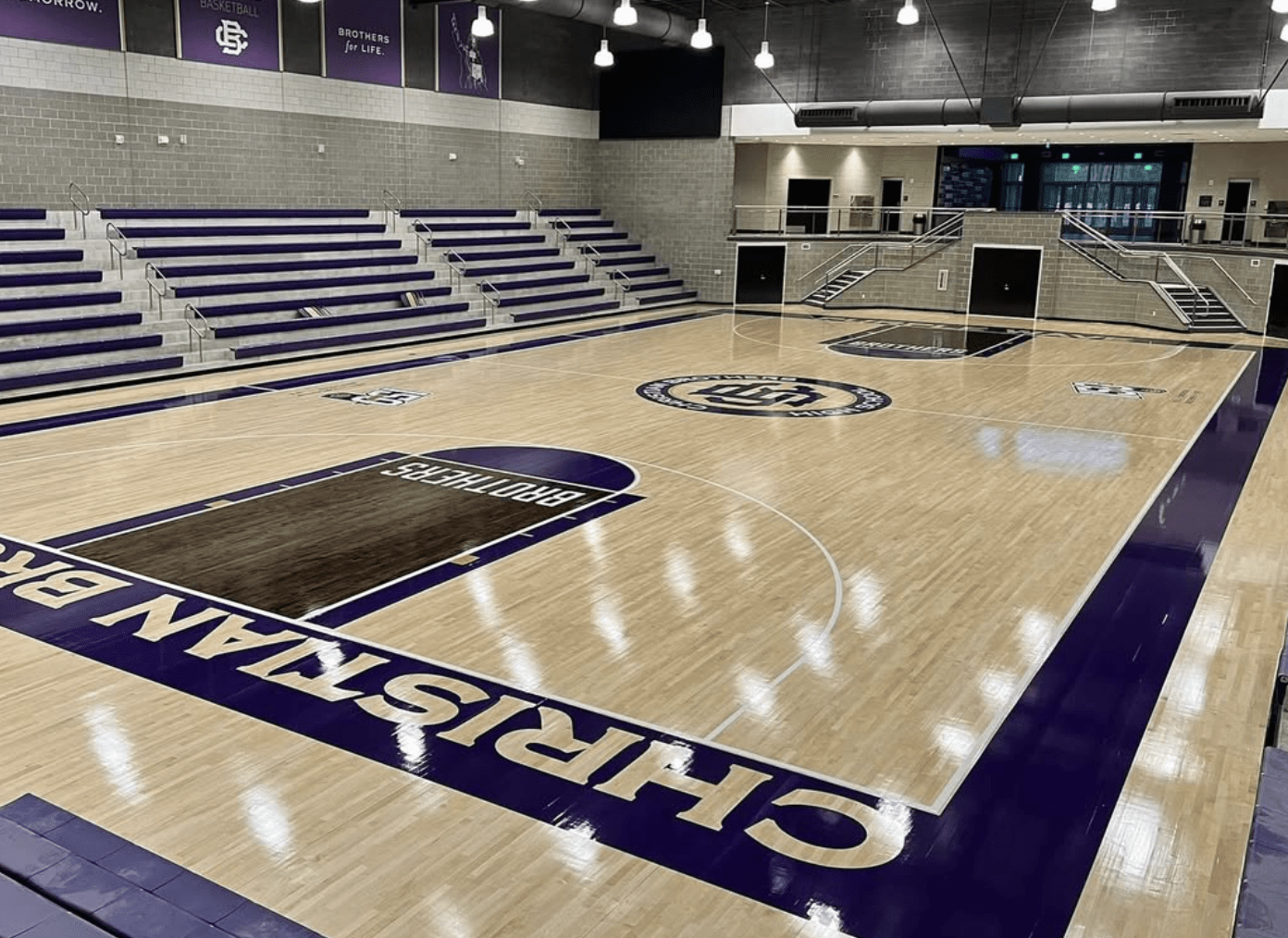
A screen and recoat (sometimes called a buff and coat) lightly abrades the existing finish with a mesh screen and applies a fresh topcoat without ever touching bare wood. It's annual preventive maintenance. A full refinishing sands the floor down to raw maple, repaints game lines and center-court logos, then rebuilds the entire finish system from the ground up.
Think of it this way: a recoat is like waxing your car. A refinish is a repaint. According to MFMA guidance, most wood athletic floors should be recoated every year and refinished roughly every 7 to 10 years. Both are standard services for wood athletic floors in schools, universities, and arenas, and both are core offerings at Sports Floors, Inc. We handle these projects every week across the Mid-South, from small church gyms to Division I arenas.
[IMAGE_SUGGESTION: Side-by-side comparison showing a gym floor mid-recoat with mesh screening equipment versus a gym floor sanded to bare maple before refinishing]
How Each Gym Floor Service Works
The two processes look similar from a distance, but the depth of work (and the days your gym is offline) are very different. Here's what actually happens on-site.
Screen and Recoat Process
- Deep tack clean. Our team removes dust, residue, and any contaminants that would compromise adhesion.
- Abrade with a mesh screen. A buffer scuffs the existing finish just enough to give the new coat something to grab.
- Vacuum and tack. Every speck of dust gets pulled off the surface.
- Apply 1 to 2 coats of MFMA-approved sport finish. Game lines stay in place and untouched.
- Cure. Typically 12 to 24 hours per coat, depending on the finish system and HVAC conditions.
Total downtime: usually 1 to 2 days.
Full Refinish Process
- Sand to bare wood using coarse, medium, and fine grits in sequence.
- Repaint game lines, keys, three-point arcs, and center-court logos. This step alone adds 1 to 2 days.
- Seal the raw maple with a paint-compatible sealer.
- Apply 2 to 3 coats of sport finish, buffing between coats.
- Final cure before players step back on.
Total downtime: usually 5 to 10 days, depending on floor size, humidity, and how aggressively your HVAC can move air.
As an MFMA certified installer, our crew follows manufacturer finish systems exactly. That matters because mixing products or skipping steps voids warranties and leaves peeling topcoats a year later. Our FSC certified flooring partnership with Connor Sports also means the finish systems we use are tested on the same maple we install.
Benefits of Recoating vs. Refinishing Your Gym Floor
Both services protect your investment, but they do different jobs. Here's what each one actually delivers.
Benefits of Annual Screen and Recoat
- Restores gloss and appearance so your floor looks fresh for the first home game of the season.
- Player safety stays protected through consistent coefficient of friction (COF). A worn, slick finish is an ankle sprain waiting to happen.
- Dirt can't cut into bare wood when the topcoat is intact. Once grit works through the finish, the clock starts on sanding.
- Floor lifespan stretches by decades when done consistently.
- Sanding cycles get deferred. Every refinish you can safely push out preserves more of the wood.
- Minimal disruption. One weekend and you're back in business.
Benefits of Full Refinishing
- Deep scratches, dead spots, and dark stains vanish when no topcoat can hide them any longer.
- The entire finish system resets when the old one has reached end of life.
- Stain color changes become possible, as does completely repainting faded or outdated game lines and logos.
- Minor cupping or crowning gets addressed through aggressive sanding (within limits).
- Lower-VOC waterborne finishes become an upgrade option, which reduce odor and let students return sooner, important for schools with tight scheduling.
Proper lifecycle planning (annual recoat plus periodic refinish) is how maple athletic floors reach their full 40 to 60 year service life. Skip the recoats, and you'll be refinishing twice as often, or replacing boards way earlier than you should.
Screen and Recoat vs. Refinishing: Side-by-Side Comparison
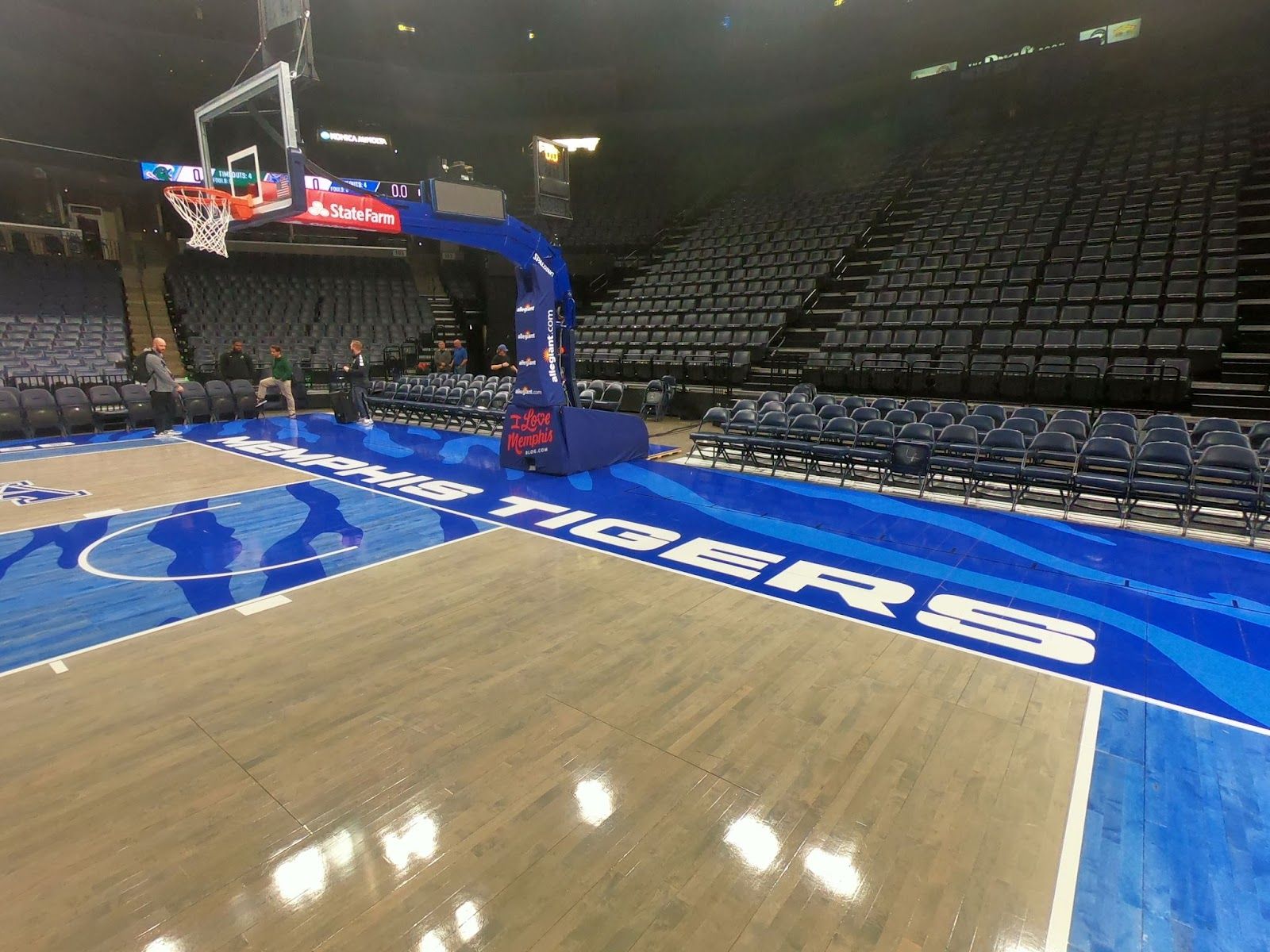
Here's the quick-reference comparison most facility managers want. Match the damage on your floor to the service that handles it.
| Factor | Screen and Recoat | Full Refinish |
|---|---|---|
| Sanding depth | None (surface abrasion only) | Sanded to bare wood |
| Scratch removal | Surface scratches only | Removes deep gouges and dead spots |
| Game line repaint | No (preserves existing lines) | Full line and logo repaint |
| Downtime | 1 to 2 days | 5 to 10 days |
| Frequency | Annual | Every 8 to 12 years |
| Cure time | 12 to 24 hours per coat | 24 hours per coat, plus final cure |
A micro-layer coating system can also serve as a mid-tier refresh when your annual recoat window gets squeezed, or when the finish is a little further gone than a buff and coat can handle but not bad enough for a full sanding. Our team can walk your floor and tell you which category you're actually in.
Ultimately, the right choice almost always comes down to one question: how deep is the damage? If it's in the finish, recoat. If it's in the wood, refinish.
Which Service Does Your Gym Floor Need?
Here's the decision checklist we use when evaluating a floor. Walk through it with your facility in mind.
Choose a Screen and Recoat If:
- The finish looks dull but intact
- Only light scuffs and foot traffic marks are visible
- No bare wood is showing anywhere, especially in the key or lane
- No peeling or flaking topcoat
- Game lines are still crisp and readable
- It's been about a year since your last recoat
Choose a Full Refinish If:
- Bare wood or gray spots are visible in high-traffic areas (the key, lane, free-throw line)
- Deep gouges or chair-leg damage you can feel with a fingernail
- Game lines are faded, chipped, or outdated
- Water damage, dark staining, or cupping or crowning in sections
- It's been 8 or more years since the last full refinish
Two Quick Field Tests
- Fingernail test. Drag your fingernail across a worn area. If finish flakes off, the system has failed.
- Water bead test. Drop a small bead of water on the floor. If it beads up and sits, the finish is intact. If it absorbs or darkens the wood, bare maple is exposed and the floor is overdue. Walk the perimeter and the center-court area both, since wear patterns rarely show up evenly across the whole surface.
Most sprung maple floors tolerate 8 to 12 full refinishes over their lifetime, so there's room to work. Schools and churches across our territories typically recoat each summer and refinish every 8 to 10 years. That rhythm keeps the floor playable, safe, and looking sharp without burning through its sand reserve early. Facility managers who build a long-term maintenance calendar around these two services almost always get more life from their floors than those who react only when problems get obvious.
Not sure which category you're in? That's what we're here for. A Sports Floors, Inc. team member can inspect your floor and give you a straight answer.
Frequently Asked Questions
How often should a gym floor be recoated?
Annually, typically during summer break. MFMA guidance and most finish manufacturers recommend a yearly screen and recoat to maintain the finish system, protect the wood, and preserve the coefficient of friction that keeps athletes safe. Skipping years lets dirt and wear reach bare wood, which forces an earlier full refinish.
How many times can a wood gym floor be refinished?
Most sprung maple athletic floors can be refinished 8 to 12 times over their lifespan, depending on board thickness and how aggressively each sanding removes material. With consistent annual recoats and careful refinishing by an MFMA certified installer, a quality maple floor can serve 40 to 60 years before replacement is necessary.
How long does it take to refinish a gym floor?
A full refinish typically takes 5 to 10 days from start to finish, including sanding, sealing, game-line and logo repainting, multiple finish coats, and final cure time. Floor size, humidity, HVAC capacity, and the finish system you choose all affect the schedule. We plan around your calendar so you're ready for the first game.
Can you recoat a gym floor without redoing the game lines?
Yes. A screen and recoat preserves your existing game lines and logos completely. The mesh screen only abrades the clear topcoat; it doesn't touch the paint underneath. The new finish coat goes right over the existing lines and locks them in. This is one of the main reasons annual recoating is such a practical routine.
Is a screen and recoat worth it for a high-use gym?
Yes. For high-use gyms, annual recoating is one of the most effective things you can do for the floor. It extends floor life, defers full refinishing by years, protects player safety, and keeps the floor looking game-ready. Skipping recoats almost always shows up later as a premature sanding project.
Whether your floor needs an annual refresh or a full reset back to bare maple, Sports Floors, Inc. has you covered. As the largest Connor Sports Flooring distributor in the Mid-South and a woman-owned one-stop shop with nearly three decades of experience, we service wood athletic floors across Tennessee, Mississippi, Arkansas, Louisiana, Alabama, Texas, and Missouri. Call our Memphis office at 901-452-9492 to schedule a floor inspection, or contact us online and we'll help you figure out exactly what your gym needs. Prepare to be floored.